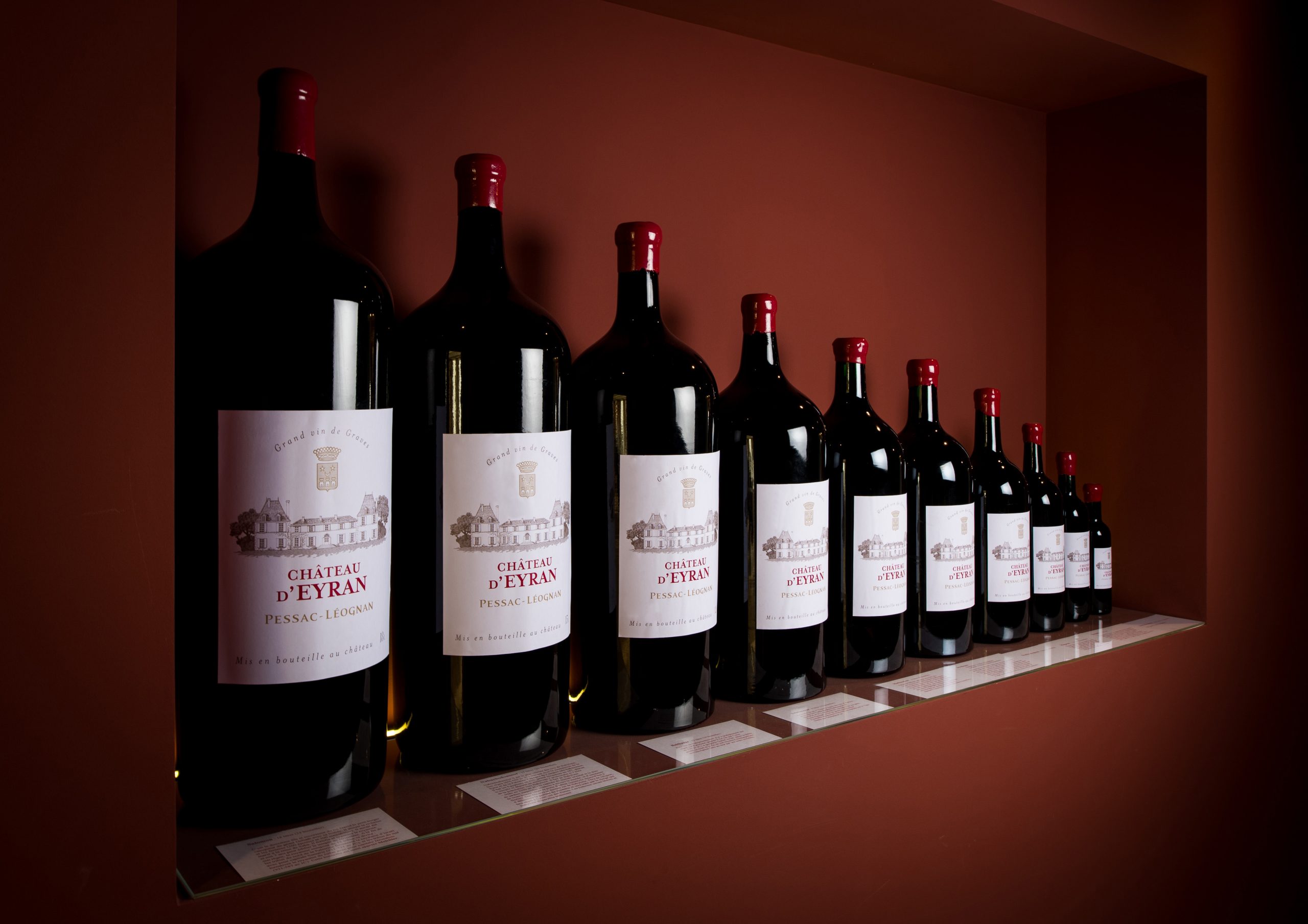
Biblical King Names for Dream Bottles
Magnum – 1,5 liters.
Its name comes from the Latin « magnus, » meaning « great. » It was likely first used in late 1889 by the English to refer to a large bottle. The magnum is available in Bordeaux, Burgundy, Champagne, and Alsace styles.
Jéroboam – 3 liters (Champagne) / 5 liters (Bordeaux)
After the death of King Solomon, Jéroboam Ier was proclaimed king of Israel (931-910 BC) by the 10 northern tribes that rebelled against Rehoboam I, Solomon’s son. He added a religious schism by establishing two new places of worship, Dan and Bethel, rivaling Jerusalem. This led to two centuries of instability with a succession of 19 kings. Jeroboam III (783-743 BC) was the last great king of Israel before the Assyrian deportation of the Israelites.
Réhoboam – 4,5 liters.
Probably named after Roboam, son of Solomon. His tyrannical rule and lack of political acumen caused the split of the 12 tribes of Israel and the division of the kingdom into two states: Judah and Israel.
Mathusalem – 6 liters.
A biblical patriarch believed to have lived for 969 years, leading to the phrase « to live long like Methuselah ». Bordeaux producers created a 6-liter bottle, called Imperial, with squared shoulders, likely in homage to Napoleon’s armies, contrasting the Empire with the royalty of other bottles.
Salmanazar – 9 liters.
With an « s » or a « z »? Both spellings are found in the lineage of Assyrian kings. Salmanazar IV (859-824 BC) consolidated his father’s conquests and was a significant builder, notably enhancing his capital, Nimrud, founded by Salmanazar I. Over time, Nimrud was overshadowed by Nineveh and was eventually abandoned and destroyed by the Medes and Babylonians (612 BC).
Balthazar – 12 liters.
The grandson of Nebuchadnezzar, he barely reigned over Babylon, as he was killed by Cyrus in 539 BC. According to the Bible, the prophet Daniel predicted his death and the end of his kingdom by interpreting an inscription made by an invisible hand during a feast.
Nabuchodonosor – 15 liters.
Nabuchodonosor II is the most famous king of Babylon. His reign (605-562 BC) marked the height of the Neo-Babylonian Empire with the subjugation of Syria and Palestine. He defeated the Egyptians in 605, captured Jerusalem in 587, destroyed the temple, and enslaved the aristocracy and elite of the population in Babylon. He transformed Babylon into a magnificent capital, famous for its Hanging Gardens and beautiful gates, including the Ishtar Gate now in Berlin.
Salomon – 18 liters.
The second son and successor of King David, who defeated the giant Goliath. He was known for his wealth and had 200 wives and 300 concubines, including the Queen of Sheba. Solomon fortified and organized the kingdom, taking seven years to build the Temple of Jerusalem. At the end of his reign, the kingdom divided into the northern kingdom of Israel (931-721 BC) and the southern kingdom of Judah (931-587 BC), with capitals at Samaria and Jerusalem, respectively. This bottle is also called Melchior.
To summarize and become an expert:
The table below shows the names and capacities of these extraordinary bottles.
| Bordeaux | Bourgogne | Champagne | |
| Picolo | – | – | 1/4 |
| Chopine | 1/3 | – | – |
| Fillette ou demi | 1/2 | 1/4 | 1/2 |
| Magnum | 2 | 2 | 2 |
| Marie-Jeanne | 3 | – | – |
| Double magnum | 4 | – | – |
| Jéroboam | 6 | 4 | 4 |
| Réhoboam | – | 6 | 6 |
| Mathusalem | 8 | 8 | 8 |
| Salmanazar | 12 | 12 | 12 |
| Balthazar | 16 | 16 | 16 |
| Nabuchodonosor | 20 | 20 | 20 |
| Salomon | 24 | 24 | 24 |
Why choose large bottles?
These bottles are often impressive and always festive! But do they have a purpose?
Yes, they do influence the aging of wine. The larger the container, the longer the wine will last. For example, a magnum will open faster than a jéroboam, but will evolve more slowly than a standard 0.75-liter bottle.
The scientific explanation: larger bottles have proportionally smaller necks, limiting the oxidation of the wine and slowing its evolution.
Want some large bottles?
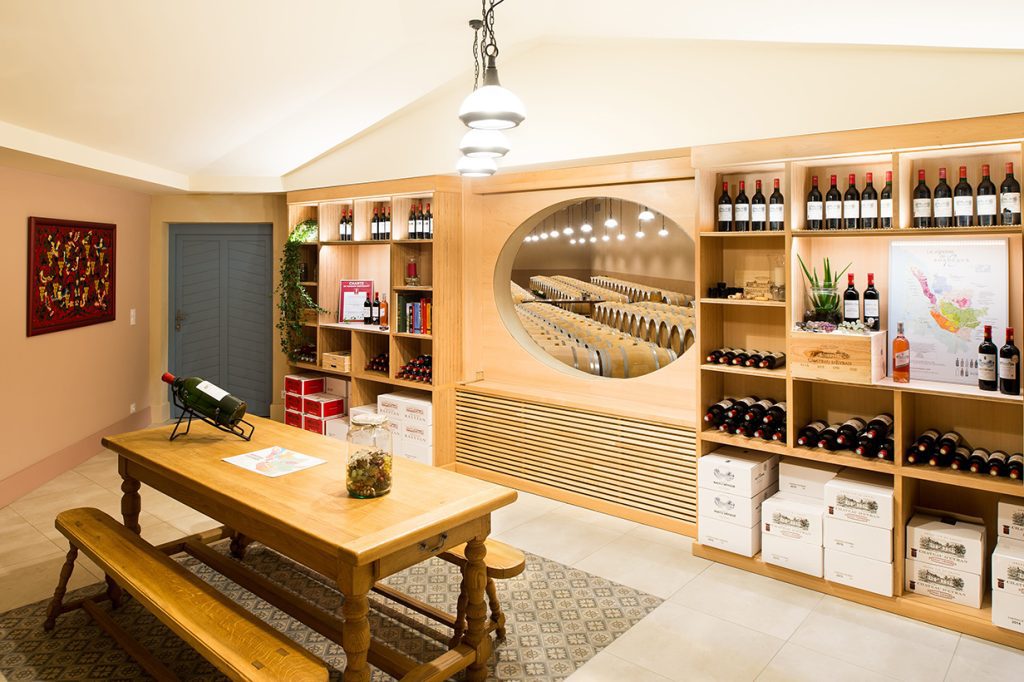
Visit our shop to find our Château d’Eyran d’Eyran in bottle, magnum, and jéroboam formats!