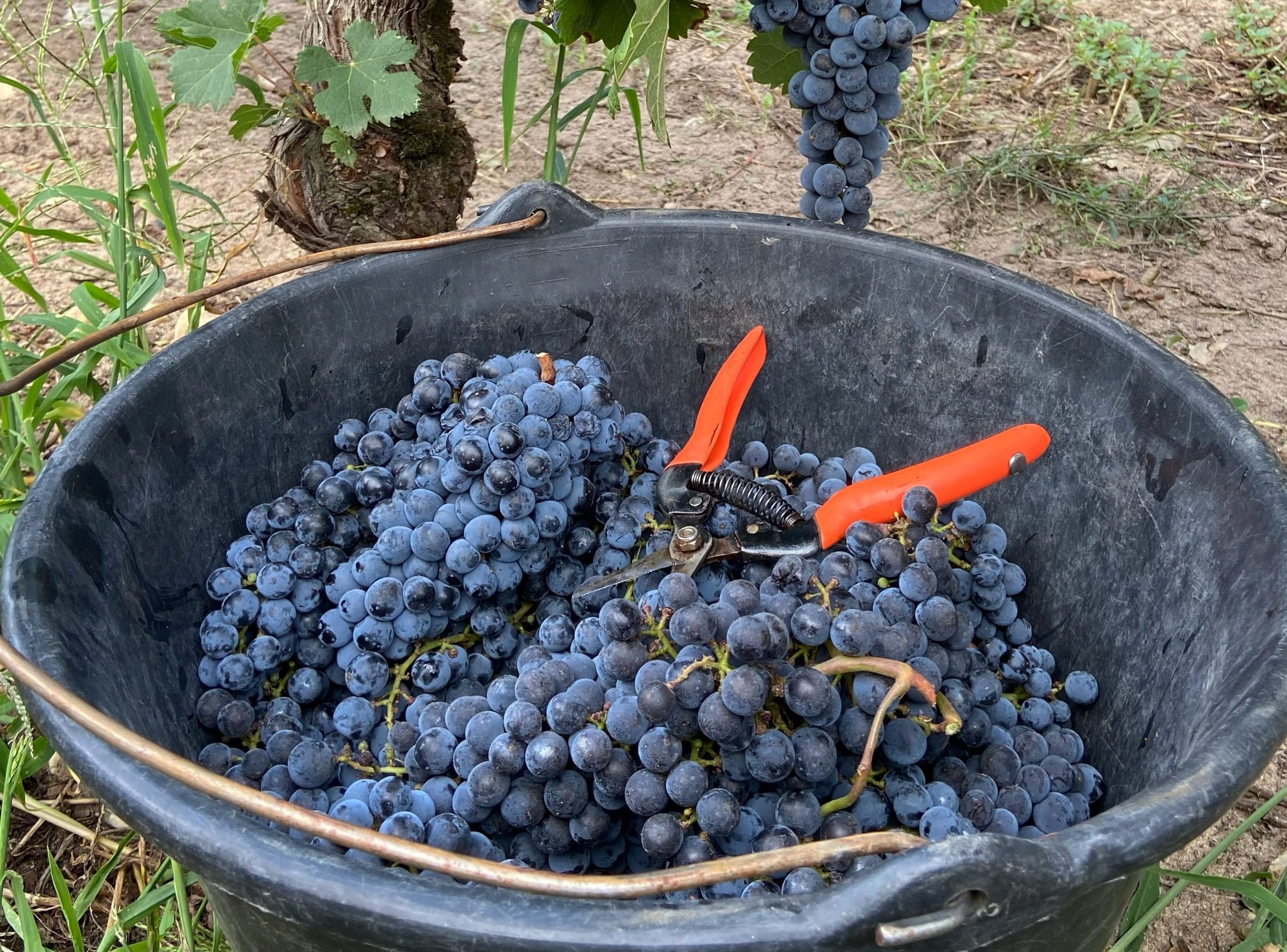
When we think of the grape harvest, it’s impossible not to imagine harvesters wandering through the rows armed with shears and small buckets, collecting the bunches before crushing them underfoot while laughing… But that’s not really the case anymore! So how does a day actually unfold during this crucial period for winemakers?
The team
First of all, a good harvest begins with a competent team and, above all, organization. At Château d’Eyran, we have five full-time vineyard workers throughout the year.
During this specific period, here’s how the team organizes:
- Florian is in charge of the winery and manages the harvest reception team.
- Maxime and José work together at the harvest reception.
- Eugenio and Didier drive the tractors and transport the harvest back to the winery.
- Charles, the winemaker, oversees the team in the vineyard.
- About 35 seasonal harvesters join us to collect from the different plots.
Harvest time
Defining a date is crucial to achieve optimal grape quality and consequently, wine quality. The date is not chosen at random; quite the opposite.
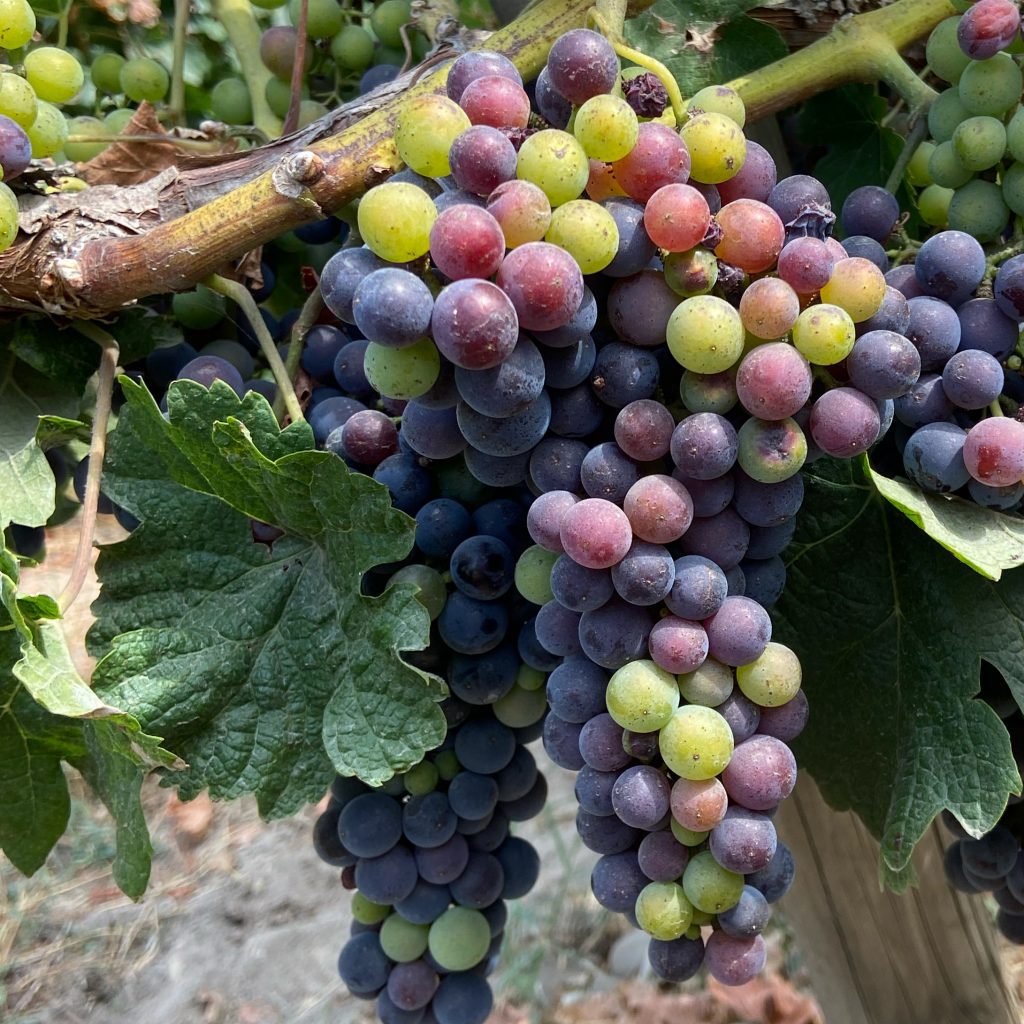
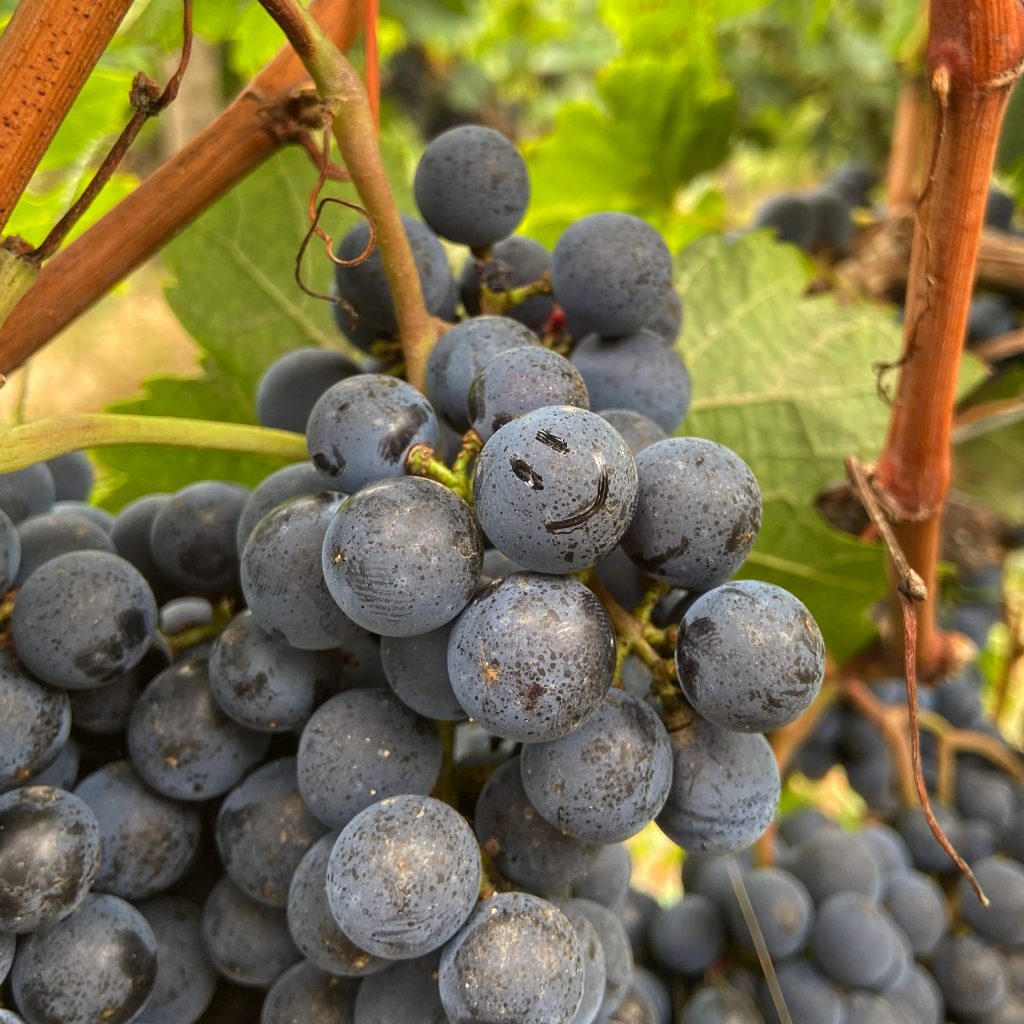
Starting from mid-August for whites and early September for reds, we begin ripeness checks on the earliest plots to observe ripeness trends in conjunction with weather developments.
A week later, we return to sample and test all of our plots. Sometimes we even do a third round. Once the samples are taken, they go to the laboratory for precise analysis.
Alongside these « chemical » analyses, Charles and Florian return several times (between four and five) to taste the lots and sample the grapes from the different plots (every week or every three days). They aim to get a sense of the sensory evolution of the grapes: the aromatic profile, phenolic ripeness (tannins), and sugar-acid balance. This helps establish a parcel order for picking based on weather forecasts.
Once the harvest begins and the first plots are collected, we continuously analyze the tanks we fill. This allows us to correlate the samples taken earlier with those obtained on harvest day, thus observing ripeness changes depending on the weather and deciding whether to space out the harvest days.
But how long does it actually last?
With 35 harvesters:
– 3 days of cumulative harvesting at Château Bastian
– 10 days at Château d’Eyran for reds
– 2 days at Château d’Eyran for whites
→ A total of 15 days spread over an entire month!
A Typical Day: For Red Wine
07h45 : The winery team arrives. The agenda is to set up for harvest reception to be ready to welcome the first truck. Meanwhile, Florian prepares the yeast starters that will be used throughout the day for successful alcoholic fermentations.
The « harvest reception » involves a machine that performs several steps:
- De-stemming: separating the berries from the stems (also called the cluster or skeleton) to keep only the fruit.
- The grapes are sorted using an automatic sorting table.
- We then crush them. The traditional method involved crushing grapes with feet, but today’s technique is less tiring and more precise and hygienic. Crushing involves puncturing the grape skins to release the pulp and juice.
- Finally, a pump brings the whole but open grapes into the stainless steel tank.
08h00 : Florian begins the first pump-overs. This step involves pumping the fermenting must from the bottom of the tank to the top over the solid parts called pomace (skins, pulp, and seeds). This allows us to extract maximum color and aromas while also providing oxygen to the yeast for alcoholic fermentation.
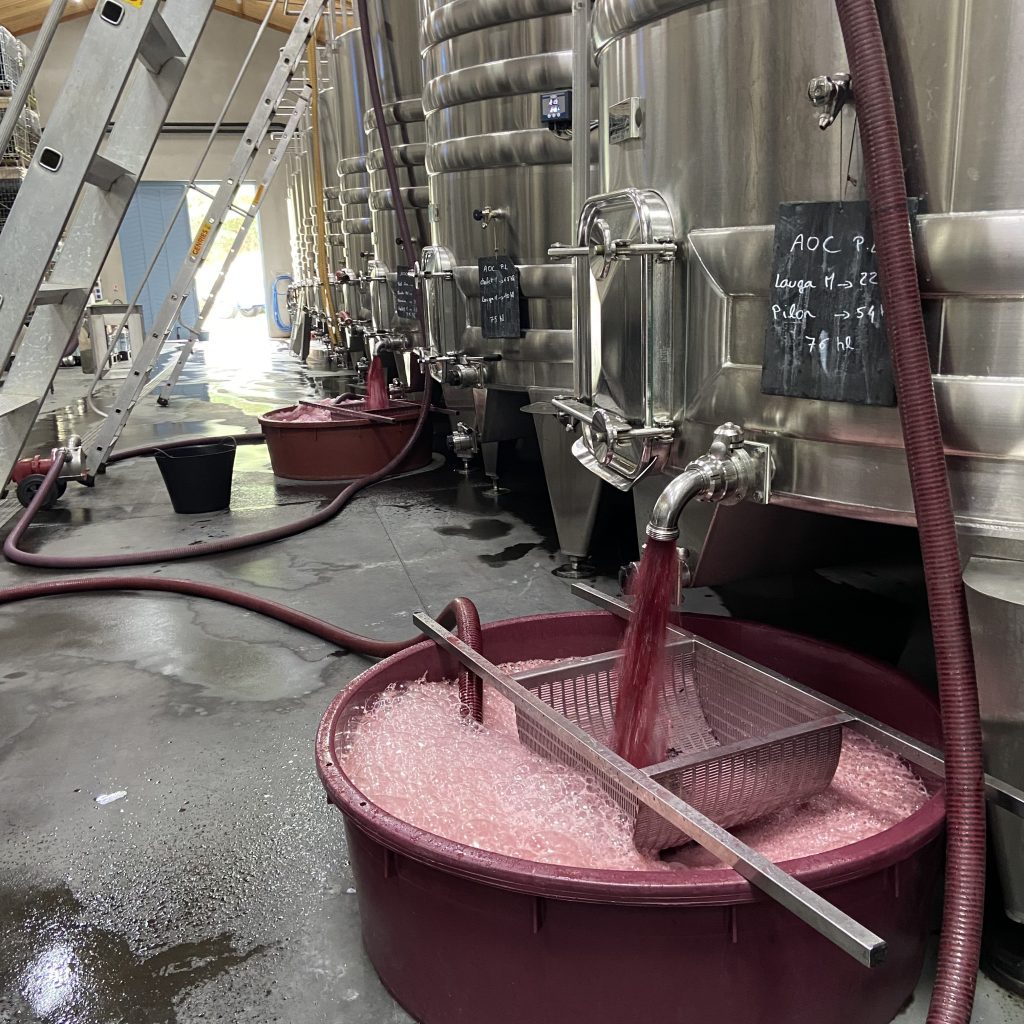
On average, we fill two tanks per day. These tanks progress together throughout the early stages of vinification. As we advance in the harvest, more pump-overs accumulate. Some tanks are pumped over once, twice, or even three times a day. Decisions regarding pump-overs are made daily based on the progress of fermentation (by monitoring the must’s density) and extraction.
The day always begins with the tanks requiring three pump-overs to space them out as much as possible. This step lasts about one hour, and our equipment allows us to manage two tanks simultaneously.
Meanwhile, Charles and the harvest team make the first cuts with their shears.
08h30 : The first truck arrives. It’s not completely full, but it starts a rotation between the two trucks to ensure there’s always one in the vineyard.
On average, a new truck arrives every 30-35 minutes, which is the time needed to empty one and travel back to the plot. At the winery, between two trucks, we remove the stems and a few grapes sorted out by the sorting machine, storing them outside before spreading them for biodegradation, then we roughly clean the table to receive the next load on a clean surface. We also take the opportunity to remove the juice accumulating in the machine.
With each arrival, the team carefully notes the different plots and the quantity harvested to analyze yield by plot and separate the lots in the tank. If we finish a plot, we always bring the truck back to the winery, even if it’s not full, to ensure proper tracking.
In years like 2022, which we call a « great year for grapes, » we also have to maximize tank usage to accommodate all the lots. Managing the tanks is therefore very important.
09h30 : We conduct the first pump-over for tanks that require only two pump-overs that day.
12h00 :The vineyard team stops; mealtime is sacred! Two trucks return to the winery, one is emptied and cleaned before the break, and the other waits in the cool for 1 PM. Then it’s the winery team’s turn to take their break.
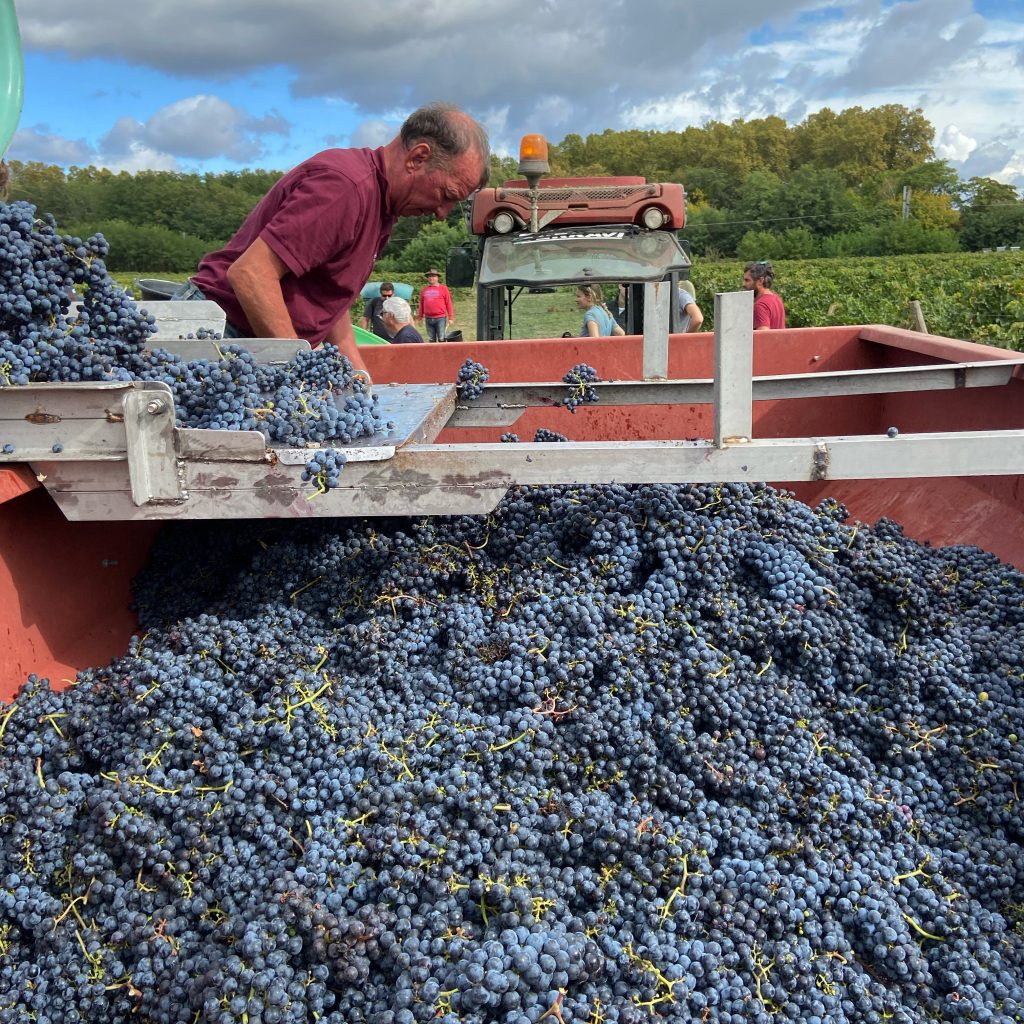
13h00 : The harvest team returns to the vineyard while the truck left waiting is emptied. The dance of the trucks resumes.
Simultaneously, the second pump-over of the day begins for tanks requiring three pump-overs.
15h00 : Florian moves on to the second pump-overs for the tanks needing two.
16h30 : Phew! The last pump-over of the day for tanks requiring three pump-overs.
17h00 : The vineyard team stops, and the last truck returns to the winery.
17h30 : José and Maxime push the last grapes into the tank, and it’s time for a big clean-up. The pump system and hoses are dismantled and rinsed with water. The machine used for de-stemming and sorting the grapes is also cleaned. If there are several days between harvests, this step is followed by a thorough cleaning of the machine to prevent tartar buildup.
Meanwhile, Didier and Eugenio clean their trucks, buckets, and hoppers before helping the rest of the team. On average, about 1.5 hours are needed to complete this cleaning and reset everything for the next day to get ahead.
And what about the whites?
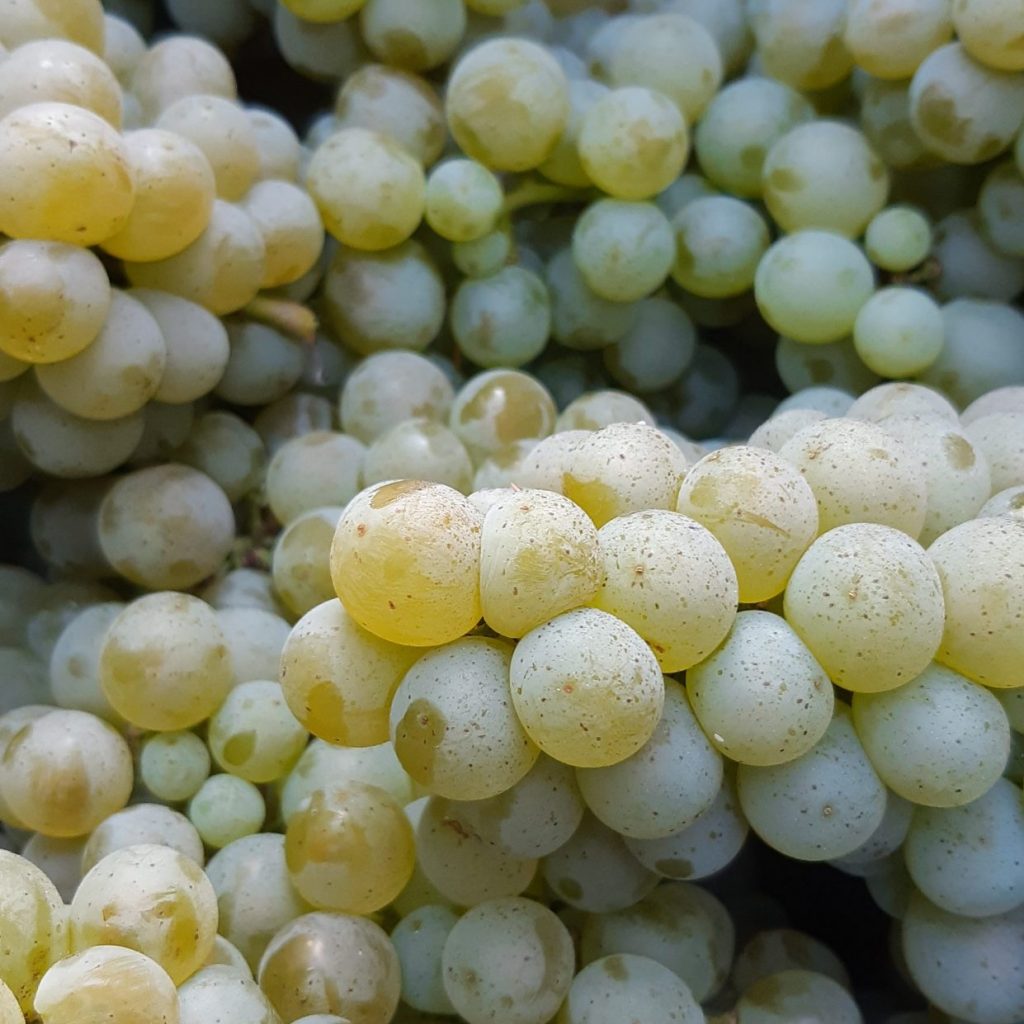
Of course, these tasks vary from day to day, and the key word for work in the vineyard is adaptation.
We start on the reds when the whites finish fermenting, but that doesn’t mean the work is over; far from it.
Alongside these tasks, the team must also continue the vinification of the whites, which means:
Finally, in the following week, analyses will be conducted in the laboratory to monitor the wine’s progress :
- During alcoholic fermentation in barrels, the barrels are filled about three-quarters full.
- Eight days after fermentation ends, it’s necessary to sulfite the wine to protect it.
- Then we perform bâtonnage to homogenize the barrel.
- The barrels will then be grouped to fill them to 100%.
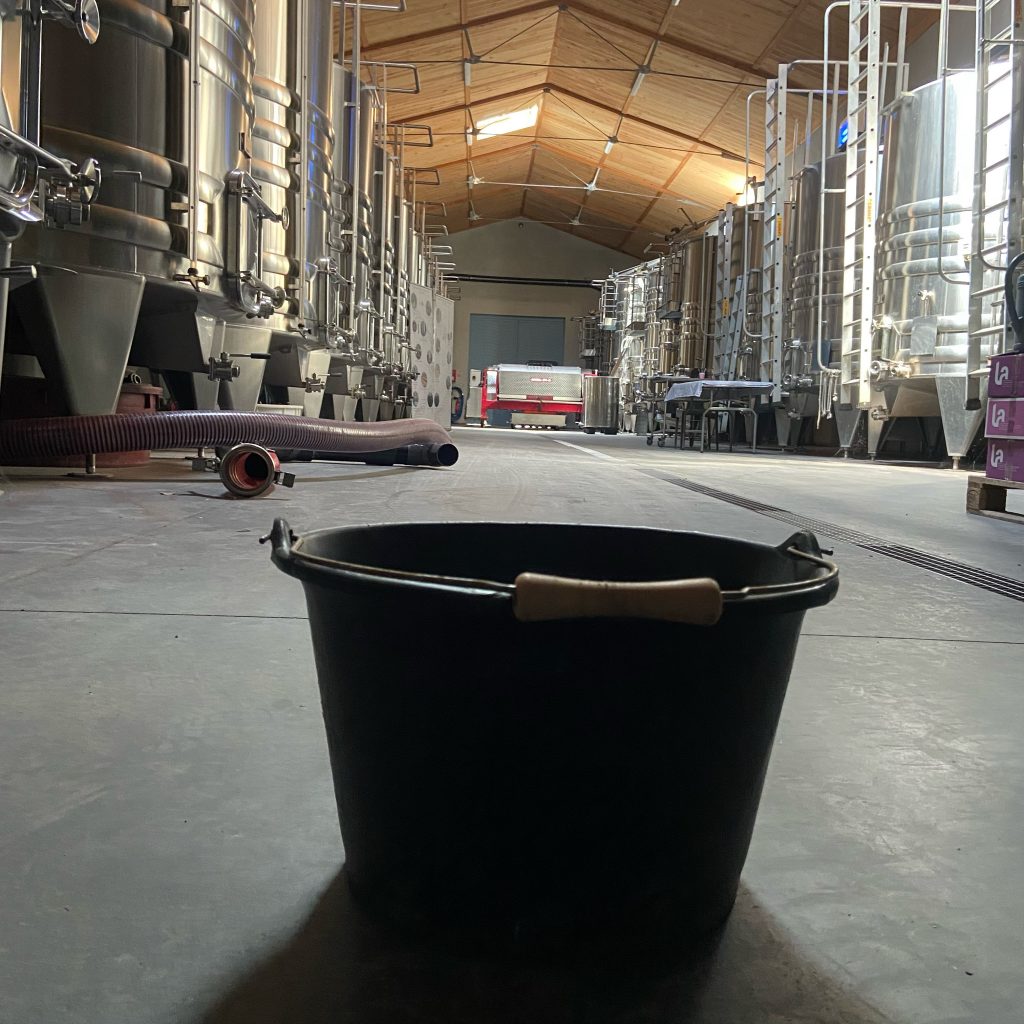
And there we are, the end of September, and the harvest is already coming to a close. It’s time to say goodbye, but especially to thank the entire team who helped us harvest a year of hard work over these past weeks. Now it’s time for the entire fixed team of the estate to return to the winery to continue the work and present to you in April 2024, the Château d’Eyran red 2022!
To learn more about the 2022 vintage and the specific conditions, don’t hesitate to watch our video on this topic by clicking here !
The harvest: the culmination of a year’s work and challenges in the vineyard.