We live in an environment filled with molecules (both natural and synthetic). This is true for the molecules used in crop protection treatments on agricultural products, but it’s also true for:
- Residues from dishwashing products.
- Molecules present in water due to groundwater contamination (from herbicides, fertilizers, or other pollutants), as well as contamination from contact with copper pipes (which aren’t necessarily harmless), PVC pipes from before 1980, or old cast iron pipes.
- Odorous molecules that enter through the nasal mucosa: diffused perfumes, essential oils, air fresheners, waxes, or other scented products.
- Volatile molecules used as solvents in paints, floor or wall coverings, plastics, thinners, fuels…
- Aluminum in our cookware is also suspected, as well as that found in body deodorants.
- Molecules migrating from packaging or containers made of paper or plastic, including inks.
- Molecules found in shampoos, soaps, lipsticks, creams, hairsprays, dyes, and various ointments whose components penetrate the skin.
- Insecticides used in sprays or contact (anti-lice or anti-mosquito).
- Molecules taken voluntarily through medications, but whose effects are not all known.
- Molecules inhaled when smoking a cigarette or other substances.
As we can see, we are surrounded. These molecules are more or less stable over time and often end up in our bodies or our rivers.
Can we do without them? It’s easy to see that this would be difficult. Are we sure that the new materials used for drinking water pipes won’t be criticized in a few decades? And if we eliminate the pipes and revert to wells, will that be more hygienic?
However, not every contaminant poses the same health risk. The problem is that risk assessment is difficult, and we tend to focus on specific risks based on media trends. The relationship between pollutants and health risks is generally unclear and often passionate.

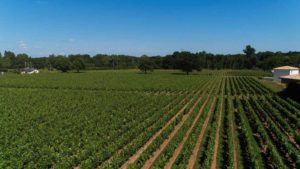
Regarding crop protection treatments in vineyards :
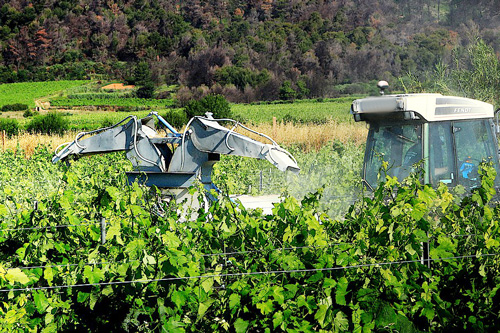
In terms of diffuse atmospheric pollution caused by spraying :
The most dangerous molecules have been banned, often insecticides. Reported accidents typically occur only during particularly intense exposures, in specific contexts, or due to improper handling.
I would like to reference the Agrican dstudy available online by searching for « Agrican » on a search engine. This study was conducted on a cohort of 180,000 people affiliated with the MSA, primarily farmers or agricultural workers. The risk of developing cancer is reduced by 30% for men and 24% for women. This is based on a population with an average age of 64, who were exposed to crop protection products at a time when the dangers of these products were not well understood. The products were more dangerous than they are today, and protective measures were not in place during application.
While this does not negate the danger of the products used, it does put the risk into perspective.
Regarding soil and river pollution :
Except for copper, the most stable (atrazine, simazine, diuron, aminotriazole) or dangerous (diquat, paraquat) molecules have been banned. Some pollutants, like nitrogen levels or the presence of atrazine, will take a long time to disappear.
Viticulture is not significantly affected by these pollutants because we use very little nitrogenous fertilizers, and atrazine has always been banned for vineyards. The debate over glyphosate (Roundup) and its degradation products is unclear and contradictory. The wine industry is adapting by reducing the area of land treated with herbicides and using the least persistent products possible.
Regarding consumers:
Consumers are relatively well protected. The (European) administration determines a « maximum no-effect dose » by testing the molecule on animals or humans. This dose is divided by 100 or 1000 if the induced effects are carcinogenic. After this precautionary division, a « tolerable daily intake » is established for a person weighing 60 kg. Then, by examining what an individual might consume in their diet with maximum residue doses, a maximum residue limit (MRL) is concluded for the food.
This MRL exists for each unprocessed consumer product. There is no MRL for wine because it is a processed product. There are always more molecules on the grapes than in the wine because, during vinification, some molecules bind to the yeasts and are removed with the lees. If certain molecules are found in wines, they are all well below these MRLs.
Analytical techniques are evolving rapidly. We can detect increasingly low traces of certain molecules. However, they must be actively searched for (surfactants or other adjuvants are rarely tested), the samples for analysis must be taken without possible external contamination, and the laboratory must be reliable (the same sample often yields contradictory results). These techniques require extreme rigor, and many laboratories charge high prices for unreliable analyses.
These analyses and increased awareness encourage us to work as intelligently as possible, using the least amount of treatment products, reducing doses, choosing the least dangerous products based on our current knowledge, and applying these products using techniques that limit diffuse pollution.
Winemakers are aware of these risks, as farmers, parents, consumers, residents, and citizens.
Stéphane Savigneux , winemaker