
Organic, biodynamic, sustainable, traditional, industrial… There are many questions, and behind these terms, the definitions often remain vague.
Biology is the science of living organisms, and for this reason, agriculture must be organic.
To obtain the ‘organic agriculture‘ label, one must adhere to a specification (a list of obligations to be met). In France, this specification is one of the most stringent in the world, and its implementation is monitored by an independent organization that withdraws certification in cases of non-compliance. Many developing countries grant this label with more flexibility. For livestock, there are standards regarding animal density per hectare, age at slaughter, and non-systematic use of antibiotics. For vineyards, the focus is on permitted treatment products and so-called organic fertilizers, which means ‘natural.’
Just because a product is derived from organic farming does not mean it is not irrigated, has not been grown in a greenhouse, is not the result of intensive farming, or is not treated. Treatment products are permitted, but they must be on a list that includes ‘natural’ active substances (adjuvants or industrial processes that allow these molecules to be applied are not mentioned). Thus, products based on copper, sulfur, or pyrethrum as insecticides are allowed. These products are less persistent than recent synthetic molecules, and the number of treatments is often higher in organic farming.
Biodynamic agriculture, based on the theories of Austrian philosopher Rudolf Steiner in the early 21st century, involves respecting the vitality of the soil and its microbial richness, and placing the cultivated plot within a sky, a planet, and the universe. The farm is viewed as a living organism in its entirety. Celestial bodies are taken into account for cultivation practices. Manure is macerated in cow horns and then ‘revitalized’ by mixing it with water, which is stirred, and subsequently applied to the fields in homeopathic doses. Plants are similarly stimulated with silica (sand) that is also sprayed in very small amounts. Biodynamics encompasses various trends, ranging from the most uncompromising to the most intuitive. There are two labels, which are rarely used. The Demeter label, for example, is granted to properties that are organically cultivated and must practice a treatment based on manure and another based on silica. It is interesting to note that this certification prohibits the use of copper on annual plants (making it not a neutral product…) but not on vines. The permitted products are the same as in organic farming, based on copper, sulfur, and pyrethrum.
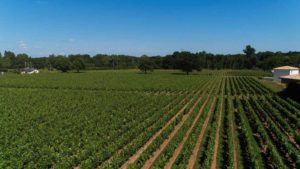
At Château d’Eyran, I practice sustainable viticulture. There is no certification or label, and anyone can claim to do so. It is an approach that takes into account environmental protection, the management of health risks, the implementation of agricultural practices that preserve the soil and limit pollution, the use of appropriate means to protect crops, and the management of agricultural inputs, effluents, and waste produced by the operation. Fertilizers and plant protection treatments, soil maintenance, the overall balance of the vine, and winemaking are different phases where we are required to make technical choices, which I will explain below.
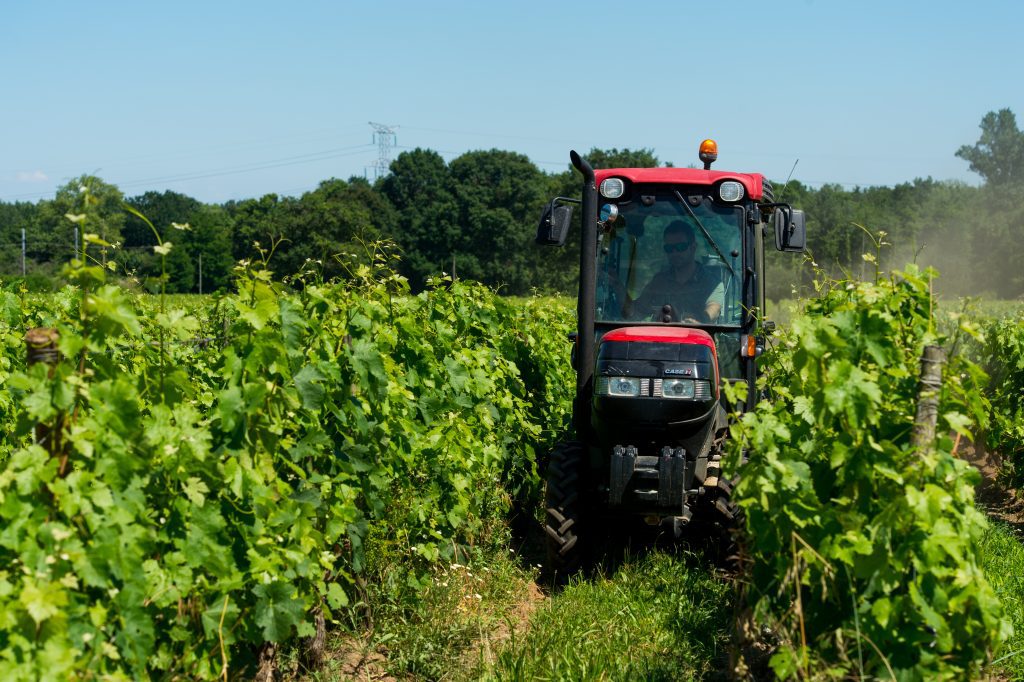
1. Plant protection treatments.
I don’t deliberately use the term « pesticide, » which is a generic term that tends to frighten people (and as a result, journalists use it). When we treat our dog for fleas or our child for lice, when we use mothballs, ant powder, or mosquito spray, we are using a pesticide. When we take an antibiotic, we are also using a pesticide. This is not the case when we get vaccinated.
The vine is a climbing plant that exists naturally on all continents. Only « Vitis vinifera » in Europe was selected for wine production. This species was quite stable until the importation of powdery mildew from the United States in 1845, phylloxera (an insect that pierces roots) in 1861, and downy mildew in 1878. While phylloxera was managed by grafting European grape varieties onto resistant American vines (which provide the roots), powdery mildew was combated with preventive treatments based on sulfur, and downy mildew with treatments based on copper sulfate.
In France, with an oceanic climate like that of the southwest, downy mildew thrives very well. Without treatment, with the grape varieties planted today, one risks damaged and highly variable harvests. In Bordeaux, it would result in a decent harvest every five years! The issue is not whether to treat or not, but rather the choice of products used—whether « natural » ones like copper or « synthetic » ones referred to as chemicals.
As soon as these questions arise, one is quickly labeled either as a farmer in the pay of multinationals, oblivious to the damage caused to the environment, or as an eco-warrior in tune with nature and rebellious against the productive system. These caricatured positions are tiring and unproductive. There are organic farmers who are true industrialists, where quality is not the primary goal, while others carefully tend to their vines and produce superb wines. There are also non-certified organic growers who think critically, do not treat systematically, and work the land and their products with respect.
For my part, I have decided not to use treatments based on copper, sulfur, or pyrethrum, which are permitted in organic or biodynamic agriculture. Here are the reasons:
- Use of more targeted treatment products: copper and pyrethrum are broad-spectrum agents that alter the microbial population of the vines and the soil.
- Ability to treat with products that stimulate plant defenses.
- Ability to choose products with a short lifespan. Copper accumulates in soils, and vines treated for a long time with copper can have their soil microbial populations halved.
- Possibility of using penetrating products that are not washed away by rain. This allows for less frequent treatments (more favorable carbon footprint). However, it can also be argued that these penetrating products alter the physiology of the vine, and that products which do not enter the plant are less harmful to it…
- To combat the rot that threatens our harvests each vintage, we have been covering our vineyards with grass for 25 years. This grass cover between the rows increases biodiversity and promotes the development of microorganisms that compete with rot. We practice manual leaf removal to aerate the grape clusters and expose them to sunlight. These practices reduce risks and allow us to treat only the most sensitive plots in a single pass, which amounts to about half of the property.
2. Soil Maintenance
Weeds: do they harm the quality of wine? And to what extent? The answer is not straightforward. I believe it is necessary to limit the height of the grass (by mowing the grassy strips) and under the vines (using rotary brushes) in order to:
- Reduce competition between the grass and the vines for water and mineral nutrients.
- Prevent the grass from shading the grape clusters and altering their microclimate.
- Promote sunlight reflection off the soil, thereby enhancing the illumination of the grape clusters.
While we have long opted to let grass grow between the vine rows, the complete elimination of herbicides is a more recent decision. We cultivate between the vine plants, although this option requires more labor and more passes through the vineyards (which is not ideal for the carbon footprint).
3. Fertilizers
We regularly add lime, which is ground limestone, more or less finely. We also incorporate mineral elements, generally derived from crushed ores and occasionally purified through chemical processes. Our soils are very sandy and poor. We regularly analyze the soil, the leaves, and the wine to diagnose any potential imbalances. We promote deep rooting of the vine plants by leaving the rows grassed and by subsoiling (using a 50 cm blade to aerate the soil deeply) every year.
4. The General Balance of the Vine
The goal is to produce the best possible grapes. In my opinion, the most challenging decision for a winemaker is determining at what yield the quantity begins to harm quality. After leaf thinning, we count the clusters per vine and then the number of seeds per cluster to best assess the harvest potential. Depending on the year, we may drop some of the harvest to limit it and ensure that the clusters are as aerated and sunlit as possible. Each plot has its own limits, and through experience, we learn to recognize them.
5. The Harvest
We maintain manual harvesting on our properties. This allows the entire team to visually appreciate the result of a year’s work, take care of the harvest, and carefully sort the grapes in the vineyard.
6. Vinification and Wine Treatments
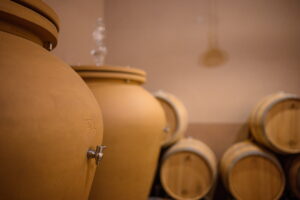
During fermentation, we do not add yeasts or enzymes (as permitted in organic farming). I believe this slower natural fermentation allows for better maceration of the grape skins during vinification, a greater diversity of fermenting microorganisms, and, we can imagine, a wider variety of aromas. The downside is the risk of deviation if a non-desirable strain proliferates.
We control the temperature to best manage fermentation and maceration. The only additive we use is sulfur dioxide, which acts as an antimicrobial and antioxidant. A rigorous hygiene in the cellar allows us to use low doses, and we reach bottling with sulfur levels well below the allowed limits. Making wine without sulfur is currently in vogue, and we may get there eventually. Despite what is stated on the label, many wines advertised as sulfur-free still have some added at bottling (the mention « contains sulfites » is also included). Are sulfur-free wines better? I don’t think so. They are often fragile, and flavor deviations are common. They evolve quickly after the bottle is opened. However, there are some very good ones.
I hope to have answered some questions. Quality is the result of a sum of imperceptible and immeasurable choices. Some are well « weighed, » others more intuitive, and often difficult to quantify. Every year, we strive to improve, to maintain the typicity of the terroir in our wines, while also achieving greater finesse and harmony, all within a responsible and thoughtful approach to environmental quality and the quality of the wines produced.
Stéphane Savigneux