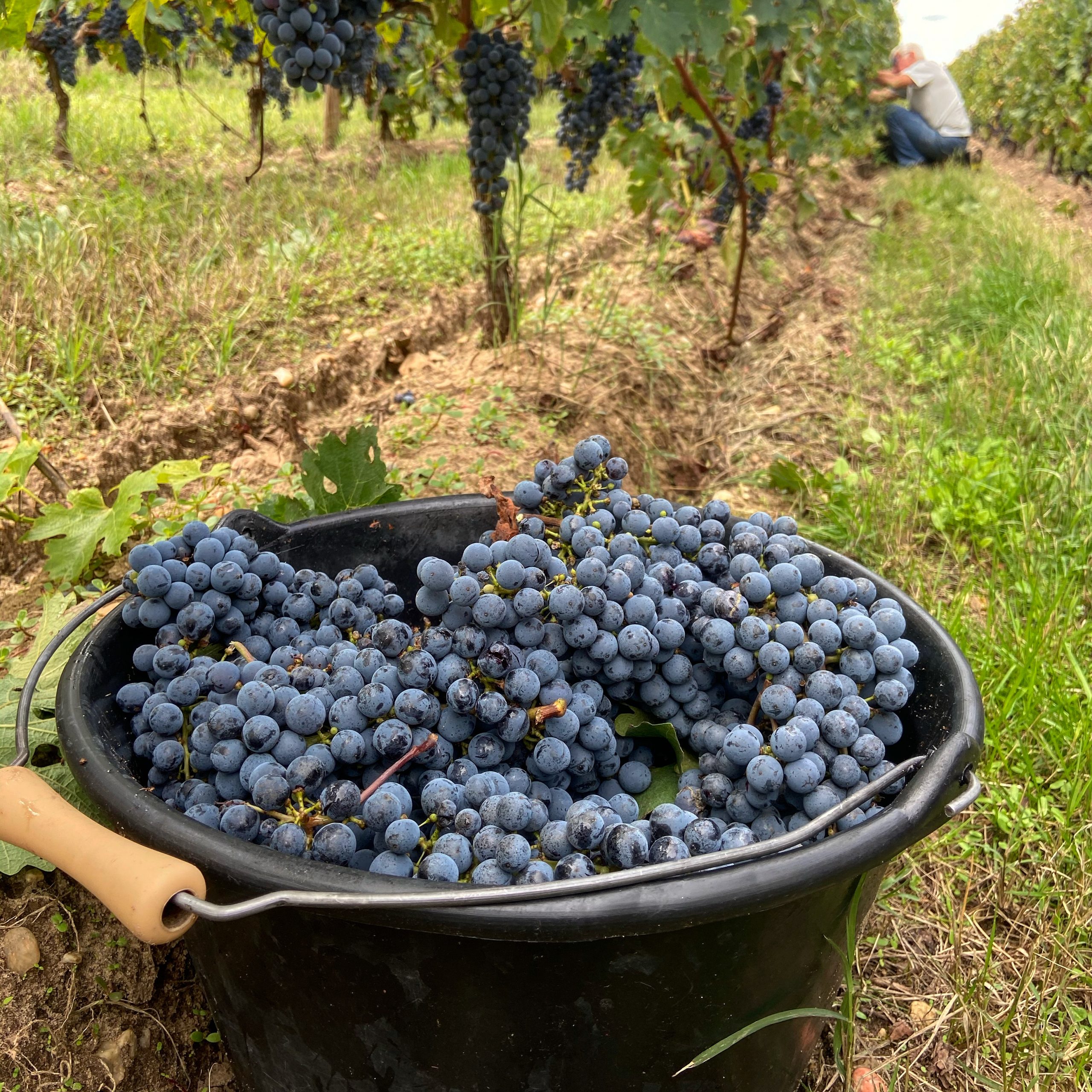
In exploring the archives, we find ten years over five centuries when, north of the Loire, the grape harvest began on August 31: 1536, 1556, 1637, 1718, 1822, 1865, 1893, 1945, and 1976. 1556 is the earliest of all. In Berry, wheat cutting started at the end of May, and grape harvesting began in early August. By St. Martin’s Day, there was a large production of good wine, but the year was also marked by a shortage of wheat due to scorching and forest fires that even affected Normandy.
In 1893, it was hot and dry everywhere in France. On April 29, Goncourt noted: “Today marks fifty-seven days of drought with an easterly wind drying out both people and plants.” An observer from Haut-Rhin summarized: “This year was, in living memory, the driest and hottest.” From February until just a few days before the harvest, not a single significant rain fell. There was a dreadful drought, forcing people to sell their livestock. In August, the grapes were scorched on the vines by the intensity of the sun. The vines flowered abnormally early, and the grapes ripened very early as well. Eight days before the harvest, a beneficial rain fell, causing the berries to swell.
In Gironde, the Guide Féret echoed this: “Dry and hot spring. The vine growth is ahead by more than three weeks. The well-exposed Chasselas began to flower around April 25, and flowering finished by May 20. The summer was constantly hot, with three insignificant thunderstorm rains. Harvesting began between August 16 and 20 in the Médoc, and between August 22 and 27 in the palus areas. From September 6 to 7, harvesting was interrupted by frequent rains and a lack of tanks. Despite the summer drought, the very juicy grapes produced, even before the rains, twice as much must as was expected.«
Goncourt also noted in his journal on July 8: “I heard the Bordeaux merchant Marquessac tell clients that the harvest, which usually takes place in October in his region, would happen in mid-August. The grape yield is so abundant that it would be equivalent to an average harvest of four years.”
What distinguishes 1893 is that both quality and quantity were present at the same time. This phenomenon was general north of the Loire. In Seine-et-Oise, the prefect noted: “Exceptional harvest in quality, up to 200 hectoliters per hectare!” (the maximum yield allowed in AOC Pessac-Léognan today is 54 hl). In the Côte roannaise, the local newspaper wrote: “The grapes were so abundant that the tanks were not sufficient. The harvest was all juice.” In the Marne department, the indirect tax administration emphasized: “Exceptional harvest in both quality and quantity.”
However, this did not benefit the winemakers. High yields weighed down prices. The Guide Féret insisted: “Overall, a good success. Due to the abundance, prices are very moderate. This vintage sells for less than the wine from 1892, which was not as good!”
On a national level, abundance was not the norm, especially in the heavily phylloxera-affected Languedoc departments. Nonetheless, it was much more than in other very hot years: 34 million hectoliters in 1822, 29 million hectoliters in 1945, but 73 million hectoliters in 1976 (the estimated production for France in 2022 is 44 million hectoliters).
The start date of the harvest is a marker of climate change. It has advanced by nearly three weeks between the years 1960 and 2010 and is correlated with rising temperatures. However, different regions respond differently to this change, and significant year-to-year fluctuations are observed. Along with the early harvests, other phenomena are emerging: grape maturation is improving, vintage quality is constantly enhancing… and the wines are becoming more alcoholic.
And the Vine?
The vine, native to the Mediterranean basin, is traditionally considered a drought-resistant plant. Its ability to endure a lack of water comes from its great capacity to explore the soil deeply due to a well-developed root system. Additionally, its water needs are relatively modest compared to other crops; controlling yields and gradually and moderately limiting its water supply are sought to produce quality wines. When exposed to drought, the vine quickly reduces its growth and sometimes sacrifices some of its leaves, which turn yellow and die. Under extreme heat, the vine develops an adaptation strategy by significantly reducing the transpiration of its foliage to preserve its leaf tissues from dehydration. An early lack of water at flowering reduces the number of berries per bunch; later in the season, this will decrease the weight of the berries and yield accordingly.